28 September, 2026
Posted: 30 April, 2026
Press Release
Ministers Lawless and Naughton announce new route into Primary Teaching as part of latest expansion of Tertiary Bachelor’s Degree routes
The Minister for Further and Higher Education, Research, Innovation and Science, James Lawless TD, is today announcing details of 32 new Tertiary Bachelor’s Degree routes that will be open to applications for the upcoming academic year 2026/2027. This expansion significantly increases the Tertiary Bachelor’s Degree route options for students to 78 and delivers opportunities in 24 counties in Ireland.
Amongst the new options available to learners this year is a new route into Primary Teaching, as well as in Health and Welfare, Business, Applied Sciences, Arts and ICT fields of study, namely Social and Community Development, Digital Business, Nutrition, Food and Business Management, Sustainable Supply Chains and Logistics, Applied Sports Performance and Coach Education, Media Technologies, Networks and System Administration, Software and Technology, Computing with AI, and Agricultural science with further expansion in Nursing provision.
Now in its fourth year, the Tertiary Programme expansion reflects strong and sustained demand for alternative, more accessible routes into higher education, with student numbers increasing by over 218% since the programme’s introduction, growing from 148 learners in 2023 to 471 learners in 2025. In response to this demand, 1,200 tertiary places will be available to applicants in 2026 outside of the traditional points system.
Speaking ahead of the 2026 course launch, Minister for Further and Higher Education, Research, Innovation and Science, James Lawless TD, said: “These programmes remove longstanding barriers such as points pressure and upfront fees, while upholding the same academic standards and outcomes as any other degree pathway. They provide greater flexibility and fairness and recognise that talent and potential exist across every stage and walk of life. I would encourage anyone considering their next step in education, whether they are leaving school or returning later in life, to explore these opportunities.”
Also speaking ahead of the 2026 launch and announcement of the new Primary Teaching Tertiary Bachelor’s Degree, Minister for Education and Youth, Hildegarde Naughton TD said: “This landmark programme represents a transformative step in how we prepare future primary teachers in Ireland. By creating a new five-year tertiary pathway, we are opening the doors of teacher education wider than ever before, ensuring that talented and committed individuals, regardless of background, have the opportunity to enter the profession. Through our partnership with Tipperary ETB and Limerick and Clare ETB, Mary Immaculate College is proud to lead a national first that not only expands access but strengthens the diversity of our future teaching workforce.”
New Tertiary Bachelor’s Degree route into Primary Teaching
A significant development within this expansion is the introduction of a new pathway into Primary School Teaching through a Bachelor of Education (B.Ed.), broadening access to the profession and supporting a more diverse pipeline of future primary teachers.
The Tertiary Bachelor’s Degree route into Primary Teaching will be delivered over five years. Learners will complete the foundation year at NFQ Level 5, delivered by Tipperary Education and Training Board or Limerick and Clare Education and Training Board, before progressing to Mary Immaculate College for years two to five, completing the NFQ Level 8 Bachelor of Education in Primary Teaching.
Continued expansion of the tertiary education model
The expansion forms part of the continued development of the tertiary education model, which is coordinated through the National Tertiary Office. With 13 programmes introduced in its first year in 2023/2024, the initiative has grown significantly, with 41 courses delivered in 2025 and a further 32 new Tertiary Bachelor’s Degree routes launching for 2026/2027, reflecting strong learner demand and continued sectoral collaboration.
Tertiary Bachelor’s Degree routes provide enhanced access to higher education, giving an opportunity to begin study within Education and Training Boards (ETBs), and then seamlessly progress to Higher Education Institutions (HEIs). Entry is not based on points, and no tuition fees apply during the first one to two years of study while learners are enrolled in an ETB. Students graduate with the same Bachelor’s Degree qualification (NFQ Level 7/8) as they would on any other degree pathway, but achieved through an alternative, more flexible route.
Courses are available across a wide range of disciplines, including Nursing, Social Work, Business, ICT, Arts, Process Manufacturing, Occupational Therapy, Public Health, Applied Life Sciences and Education. Programmes are co‑designed by ETBs and HEIs in partnership with industry, supporting learner progression while addressing critical skills needs across the country.
Tanya Jones, Head of the National Tertiary Office, said: “Tertiary Bachelor’s Degree routes are built on people’s potential and interests, not on points. They are opening doors for individuals who may never have seen third-level education as an option and offering a real chance to progress into higher education without the traditional barriers that can hold people back.
“With pathways available in 24 counties for 2026, including a new pathway into Primary Teaching, these programmes are designed to answer directly to skills shortages while setting learners on a productive and rewarding path. By starting locally in an ETB, with no points requirement and no tuition fees in the early years, Tertiary Bachelor’s Degree routes give everyone, no matter their starting point, the opportunity to follow their ambitions and graduate with the same Bachelor’s Degree, through a route that works for them”
Dr Alan Wall, Chief Executive Officer of the Higher Education Authority (HEA), said: “The continued expansion of Tertiary Bachelor’s Degree routes is a clear priority for the Higher Education Authority. We are pleased to be working in partnership with SOLAS through the National Tertiary Office to grow these opportunities nationwide, and the availability of 78 pathways to a Bachelor’s Degree for 2026 reflects both the strength of that collaboration and the demand from learners seeking an alternative, more accessible path”
Deirdre McDonnell, Chief Executive Officer of SOLAS, said: “Further education provides an accessible route to qualifications and careers for learners in every community. SOLAS is delighted to work with our partners on development of these important tertiary degree pathways nationwide.”
Prof Emer Ring, Dean of Education, Early Childhood, and Teacher Education at Mary Immaculate College said: “Mary Immaculate College is proud to be a partner in the delivery of this new Tertiary Bachelor’s Degree pathway into Primary Teaching. With our long-standing commitment to excellence in teacher education, we welcome this model that broadens access while maintaining the academic rigour and professional standards that have long been a hallmark of primary initial teacher education programmes. This pathway recognises that there are multiple routes to achieving aspirations and enables us to support talented, motivated learners from all backgrounds to progress into teaching and make a meaningful contribution to schools and communities across Ireland.”
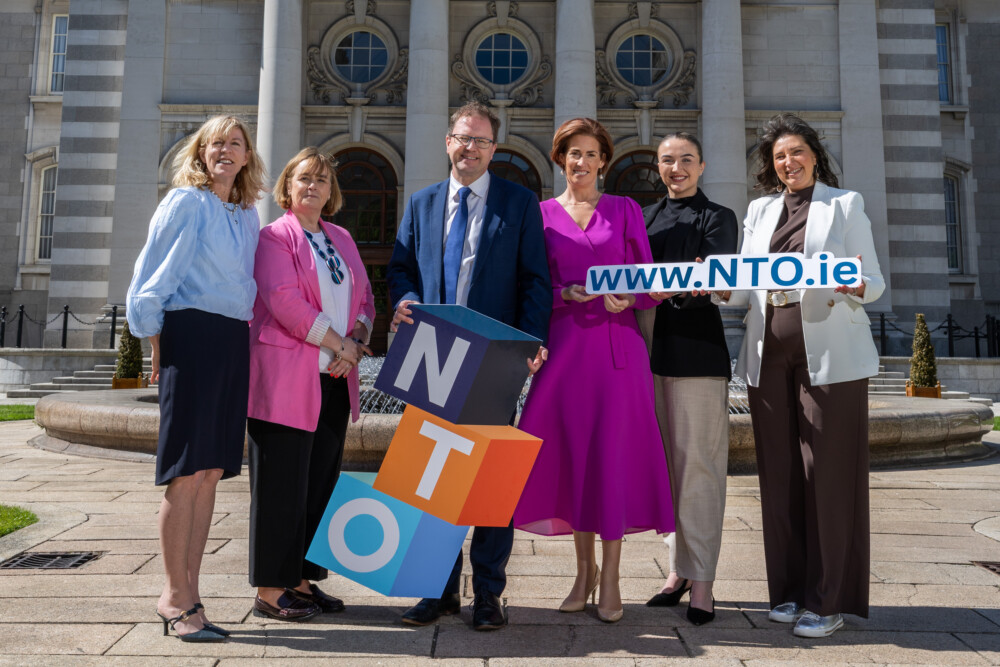
To find out more information about Tertiary Bachelor’s Degree routes and to apply visit www.nto.ie.
28 September, 2026
16 July, 2026